
Double Bill at Stage@Leeds
Published 21 Jul 2026
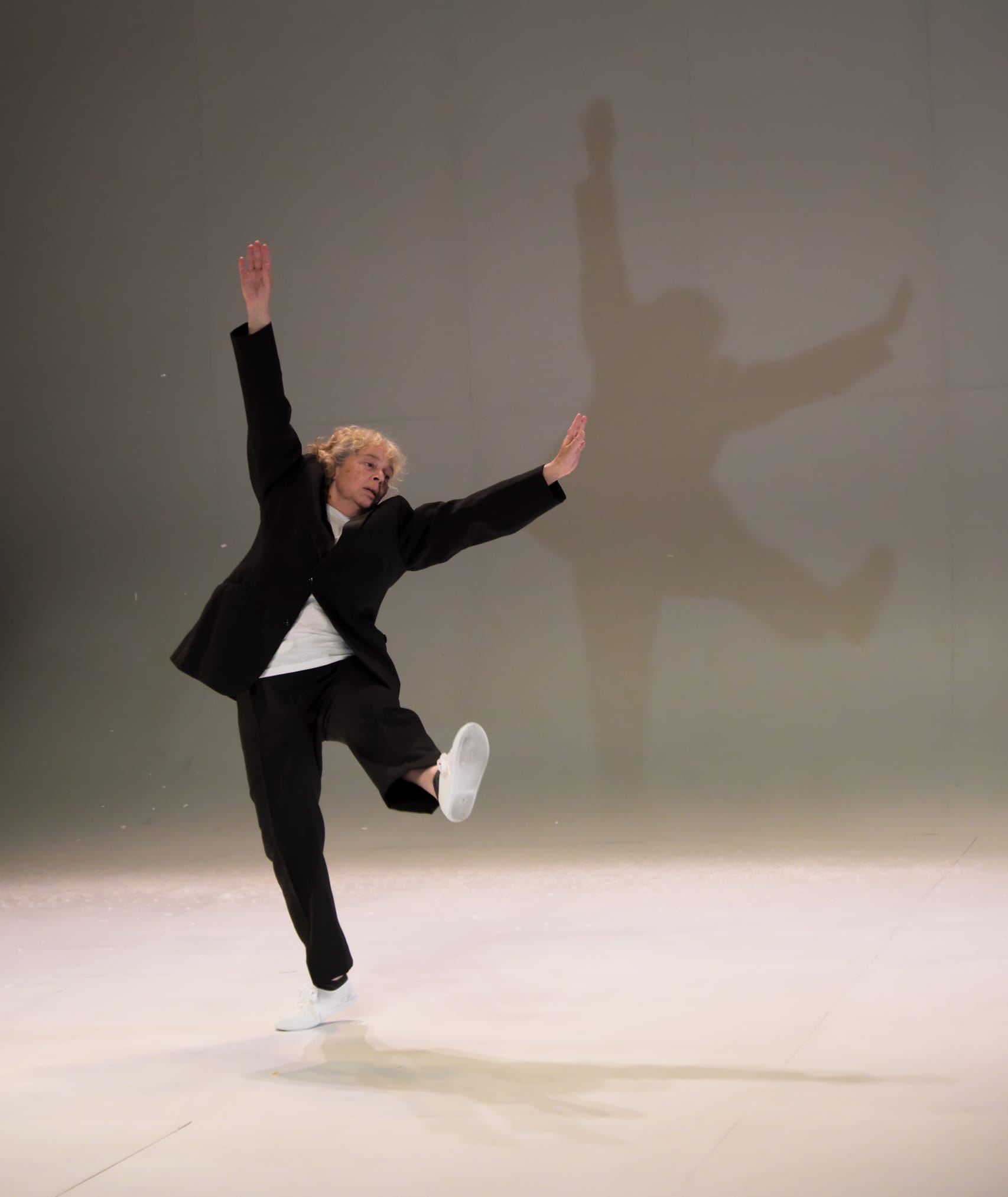
An interview of Choreographer Tamara McLorg and Director Alex Elliot, by Resident Producer Izzy Massie, ahead of their double bill performance at Stage@Leeds.
Izzy: Could you give me a taste of what audiences might expect
Tamara: My piece is inspired by the music by Faurè’s Requiem which I just think is a beautiful piece of music. It’s sublime. And what I love about it as a requiem, is that it has a sense of hope, there’s a lightness about it compared to many other requiems.The problem is, it’s just such a beautiful piece of music that I feel, can I actually represented it in dance? So that’s my challenge, I suppose.
For me what is is interesting is I’ve done it quite a few times. I’ve done it with children. I’ve done it with professionals. I’ve done it with teenagers and in different countries, but this is the first time I’m doing it with the cast of people over the age of 60. So I feel that they’re going to bring something very different just because of their life experiences. Without being morose, I think there is that knowledge that our time on this planet is maybe not quite as long as we thought when we were 20. And that is something that we all have to face. And also, well, I think we’ve got to the point that quite a lot of our friends are passing on. So, I think making the work has made me think about things like that really.
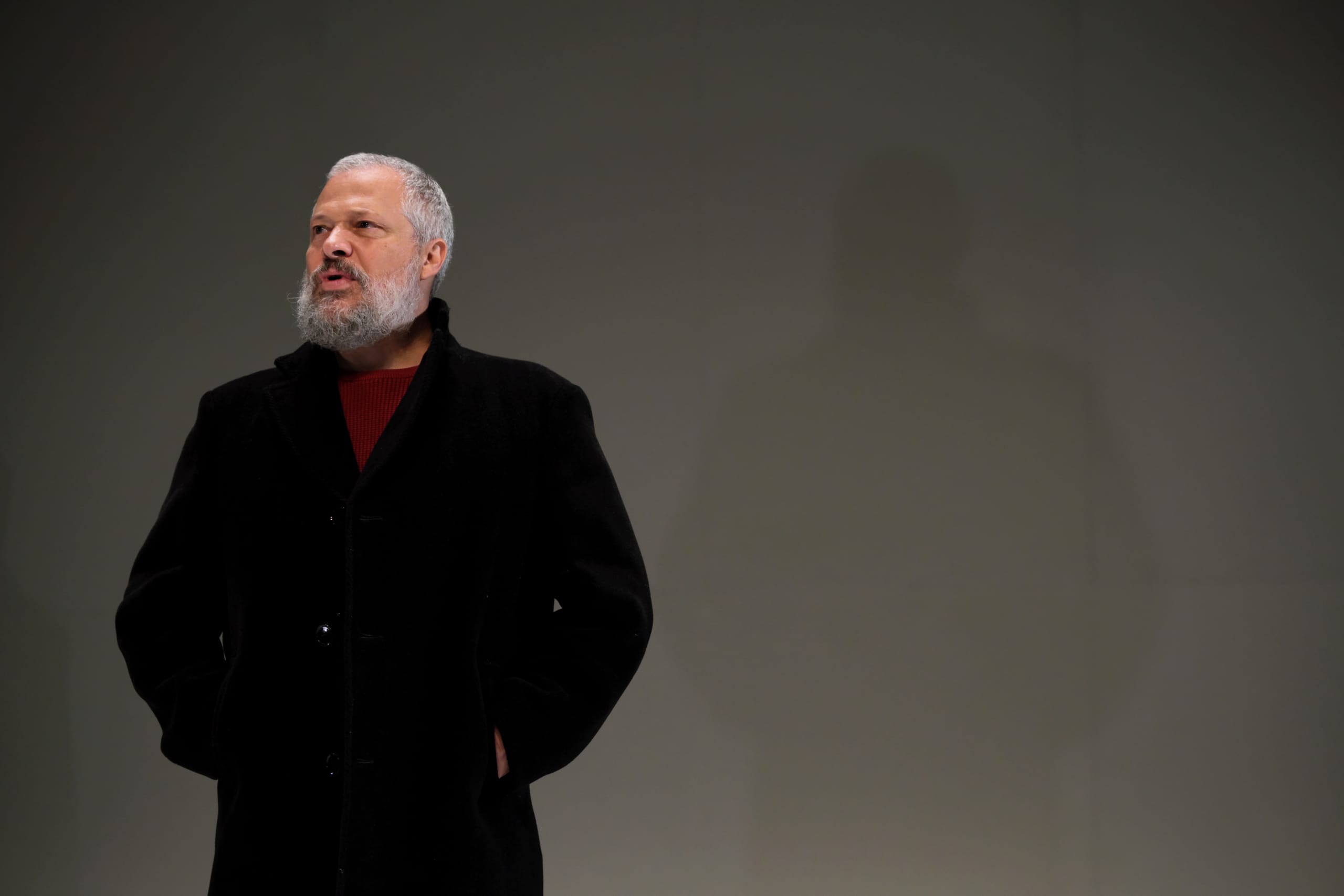
Alex: Well, audiences will have just watched the dance piece, Requiem. What they’re going to see is quite different to that. It doesn’t live in the world of dance, although there’s movement, and I’m very interested in movement. I’m interested in how bodies move, and how language moves, and how light moves in space, and so on. So with the company we’ve been exploring sensuality, sensation and meaning in many ways. The piece is like a mosaic, although there is movement its much more about fragments coming together to create an impression.
Izzy: What has your experience been like working with the core and the wider ensemble performers, throughout the past 2 weeks?
Tamara: The group that I’ve been working with, the cast, have just been fantastic. The majority of them I’ve worked with over quite a few projects so it’s not as though I walked into a room and I don’t know anybody. They’ve just been so supportive and they’ve worked so hard, I couldn’t ask anymore of them. And for them, it’s a challenge because I’m trying to make a 40 minute piece in 3 weeks, rehearsing 2 hours a day, Monday to Friday. So, yeah, the group have been amazing, and I think people should come and support them, and I think they will be quite surprised.
In a lot of work with older people the music’s quite light, it’s quite jolly. I kind of felt that I wanted to combat that, to go a bit deeper within, within the movement structure, within the structure of the choreography, and to challenge them as well. And I was very much like, oh my god, how are they going to react to this difficult piece of music? But they’ve been fantastic.
Alex: I’ve loved it. We did have some preliminary workshops a couple of months ago. They brought up lots of interesting ideas that I’ve then gone on to explore with the company. Some people had not been to those workshops at all, so they’re coming to it fresh, others had some ideas or had contributed texts and so on. It’s been a whirlwind process, because it’s been, in effect, two weeks and they’ve been half days. So it’s been an accelerated process, but I think that could only have happened because we have people like Heather our Company Stage Manager who are really used to working in this way and can get information to people quickly and help organise the space and the text and everything. But also because I think there’s a predisposition now from the ensemble as a whole to try things. I think there’s a real sense that people will try things, give it a go. But always on the understanding that I don’t want anybody on that stage to be doing or saying something that they’re not happy with, that’s really important for me. So sometimes I’ve come with ideas to explore, but other things have emerged.
Izzy: The show marks the 10th anniversary of The Performance Ensemble. What’s kind of your experience being throughout the past 10 years?
What has being a part of the company throughout the past 10 years meant for you?
Tamara: I’ve been working with the company for 10, 11 years now, since the first show, Anniversary. I have choreographed every show. But I’ve worked with the Artistic Director, Alan Lyddiard for nearly 50 years, since about 1976. So I know how he works. I came straight from working a lot with young people at risk, in quite challenging environments. And so for me to suddenly work constantly with a group of older people has been a learning process for me; how I do the warm up, what I can do choreographically. It became an artistic challenge about how I could use older bodies, let’s say.
Also most of the work that I do with the performance ensemble, I’m there to support Alan’s work. It’s about stories. The priority is about stories, and people’s stories, and people are desperate to tell their stories. Where as I come from a slightly different background, and for me, it’s like, how can I find that out through the body? I have had to find a different way of working. As a choreographer, normally in my work, I have the final stay. But in this instance, and my role in the organisation is that I’m there to support the work of the director, so they will make the final decisions, not me. So that’s been kind of not always so easy for me to accept. I have to be honest. But again, it’s been good for my ego. The more Alan and I have worked together throughout the past 11 years, I have found I’ve had to find a new way of how I work, which has been a interesting journey.
Alex: You say 10 years and that seems like a long time, but it has flown by. From being a part of the process of anniversary, kind of stepping in, and then, seeing Royston at work, and starting to work with Villmore, and Sally, and Tammy, and all of the members of The Performance Ensemble, joining for different productions, becoming regulars, as audiences and also participants, who then inform the work, and so on. It’s been a really rich process.
I wouldn’t be doing the work I am doing now if I hadn’t worked with Alan over 20 years ago. And I wouldn’t be here if I wasn’t really interested in what’s going on. I think there’s fantastic potential. There’s so much that we can do as a company. So, I’d say, these have been 10 years, but it’s like 10 years preparing a really solid base for what I hope will be decades of work in this field, because we know, the population is going to grow older. We do not suddenly lose our desire to be lyrical, to be expressive, to be artistic, in whatever way we want to be, to demand things, to say how things are and how we feel they should be. So, yeah, I’m here until I drop.
Izzy: Why should audiences come to see the show?
Alex: Because I think you will see an ensemble. You’ll definitely see an ensemble working together, to take you on a journey. And I know that as a member of an audience, once you see that the company before you have got that confidence, that surety, and fluency, then it’ll be a joyful experience, and you can entrust that experience to them, but also can allow yourself the opportunity to take it all in. I think it’s a, it’s a piece that you won’t see every day. It’s a piece that, that in a way, is emerging from over 35 years of practice for me. So I am interested to see how people react and what they get from it. There’s a lovely feeling in the room, and that’s always a great thing. I think that brings a lot to production.
Tamara: Because it is going to be great.
Izzy: It really is.
Requiem and Silence at Stage@Leeds on the 24th and 25th of July. Book your tickets now: https://stage.leeds.ac.uk/events/double-bill/
Join our mailing list for updates,
show dates and opportunities.